Monday, September 29, 2014

春木屋 Harukiya: ramen history

Ogikubo is one of the most famous ramen areas in all of Japan. And Harukiya is one of the oldest and probably the most famous shop in all of Ogikubo. Which makes Harukiya a contender for most famous ramen shop in the world. In existence since 1949, the shop was pumped up by the legendary film director Yamamoto Kajiro, who also mentored and elevated none other than master director Akira Kurosawa (Yamamoto was also a fine director of comedies, though they've been mostly forgotten due to their lost status). Is Harukiya the Kurosawa of ramen? We shall see.


Harukiya was one of the early adopters of the Tokyo chuka-soba, a blend of fish and chicken stock mixed with fresh vegetables. The shop adds a secret recipe of shoyu sauces for additional impact. This was the most common bowl post-war, and is said to be a big inspiration for Momofuku Ando's Nisshin brand Chicken Ramen and Cup Noodles developed to cheaply satisfy Japanese appetites.

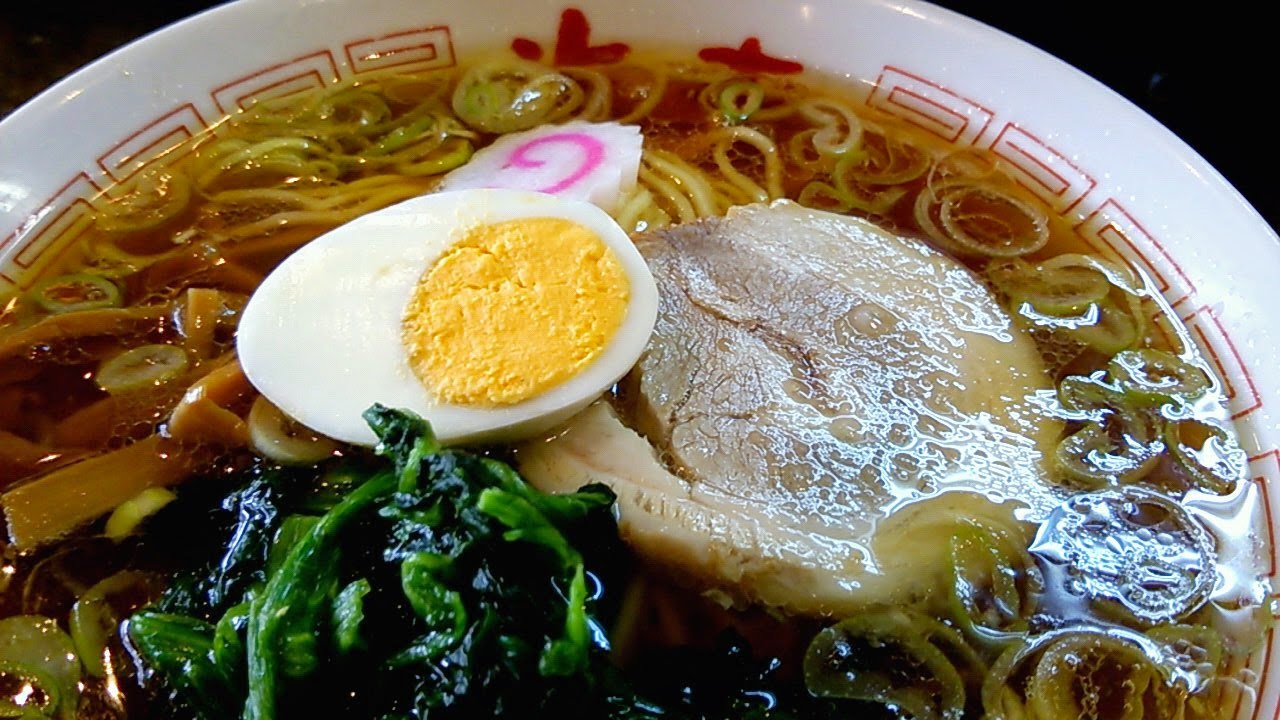
Chuka-soba (800yen)

Harukiya's chuka-soba has fantastic broth. Piping hot, with what appears to be an extra layer of oil on the top, this is a bowl with complex flavors that kept getting better with every sip and slurp.


The noodles are a perfect match. Curly and chewy, hand-made every day. These are some of the best strands in all of Tokyo. I just wish there was another handful more.


At 800 yen, it's a little pricey for such a simple (and meager) bowl. I can't make this a regular spot, but anyone who is serious about ramen should visit it at least once or twice.


Generations of Harukiya fans no doubt bring their kids and grandkids here. Harukiya's bowl is said to keep evolving, which is no doubt precious marketing hype, but I could see this bowl taking on additional complexity with future slurps. Ramen Love will need to plumb the depths of Ogikubo, land of old-school ramen, in more detail. 


Tokyo, Suginami-ku, Kamiogi 1-4-6
Closest stn: Ogikubo

Open from 11am-9pm

Hearts

Thursday, September 25, 2014

八雲 Yakumo: sexy evil (wonton) genius

What wonderful weather for walking around! Tokyo is ready for autumn.

Hearts and I wanted to have something clean and smooth. Yakumo, famous for their wonton ramen, fit the bill. It even has a smooth interior with cool jazz music. The clientele was also diverse, the counter filled with couples, young guys, middle-aged women, and of course, us.


While the soup base is a shoyu, you can choose the strength of the soup. "Shiro" is a very light shoyu, almost like a shio. "Kuro" is deeper and blacker. The "Mix" is the one to choose: a little from column A, a little from column B. I always order a "Half" wonton bowl, with equal portions of pork and shrimp wontons. I like half :)


Tokusei wontonmen half (mixed (880yen)

The smell is stimulating and the thin-but-firm noodles are beautiful.


They provide a great contrast to the wontons, whose silky skin just melts in your mouth. The pork wontons are a little better than the shrimp, but both should be ordered and devoured. Who was the first person to combine wontons with ramen? I always thought that was a genius idea. Whoever that person is, I want to kiss him (or her) on the lips.


The chashu here is also really surprising good. Soft, chewy, with great savory flavor. Nearly every component of this bowl is outstanding.


Nearly everything, since the menma was extremely salty and generally mediocre. I almost wanted to tell them, since everything else about Yakumo is perfect. They seem to get better with every visit.

Tokyo, Meguro-ku, Ohashi 1-7-2
Closest stn: Ikejiri-Ohashi

Open from 1130am-330pm (open for dinner from 5-9pm on weekends, closed Tuesday)

Lum

Monday, September 1, 2014

りきどう Rikido: thick-bottomed noodles

Rikido is technically in Gifu prefecture, but we decided to check it out since we were way out in the countryside paying respects to the graves of ancestors. When we arrived, we were the only customers inside, but we beat the rush. In less than 10 minutes, a line had formed against the back wall.


Mr. Rikido is a loud and strong master, whose countenance and demeanor is like the captain of an anime baseball team. He runs a clean and no-frills shop with an assistant, whose role is to be barked at. Rikido makes the ramen entirely himself.

This unfortunately leads to some inefficiency. Despite being the first customers for lunch, we had to wait nearly fifteen minutes for our bowls, which all came out at different times. Fifteen minutes is pretty good...for a diner. For a ramen shop, this could be a death knell, especially considering there were no other customers in front of us. Part of the reason for the wait is that Rikido measures out each batch of noodles, slices each shank of pork or seasoned egg, and arranges the ingredients in each bowl himself. Fresh and personal is no doubt what Rikido is aiming for.

Rikido also specializes in noodles made and cut in the store, minutes before your order is placed (he thankfully has the assistant do this part, or I might still be waiting for my bowl rather than writing this review for you). For the house-specialty tsukemen, there are four different options for the size and density of the noodles, and I opted for the biggest and baddest flat-sized noodle. Because 'Murica.

Sugohiramen tsukemen with egg (930yen)

The style here is a gyokai shoyu, heavy with niboshi accents.


The noodles are delicious and taste of fresh flour. But they are a poor match for the thin soup. I had to let the noodles practically soak in the bowl for any broth to cling to them. This is a salty soup. I asked for soup wari, and the master splashed a little ramen water in the bowl, but this hardly anything made any difference to the salt bomb.


Your better option is the traditional, no-frills ramen, with noodles of medium flatness.

Kohiramen ramen with egg (880yen)

Less salty and more balanced, I'll get this the next time I'm driving around in the middle of Gifu.


It's way out there, so for any Gifu readers, this is a decent option if you're prepared to wait.

Gifu, Gifu City, Shimasakaemachi 2-23
Closest stn: Gifu (closest in this case means 2.5 km away)

Open from 11am-230pm and 530-10pm

Hearts

Friday, August 29, 2014

好陽軒 Koyoken: korai style

It was time for Nagoya to step up its game. Enter korai-kei ramen.

Korai-kei isn't as well known as its more famous brothers such as Yokohama Ie-kei, or even the sloppy Jiro-kei, but it's much healthier than either of those pork intensive bowls. A speciality of Nagoya's Chikusa ward, these are bowls made of pork and chicken stock, dried bonito, and lots of vegetables. The bowls are so clean they supposedly have medicinal properties.


Koyoken, a mom and pop run single counter, is one of the best in the area.


Korai-kei ramen is ordered by Matsu, Take, and Ume, the three kanji in the word shochikubai (松竹梅 ), which translate to "pine, bamboo, and plum." The words together signify the "three friends of winter" and are commonly used for greeting cards and celebratory events, though most people probably know the word from the mediocre sake.

Anyway, the Matsu is the standard bowl at any korai-kei shop. A few thick bamboo shoots, thick and curly noodles, and thinly sliced round chashu.

Matsu (800yen)

A slightly cloudy soup is famous for being light on oil but dense with flavor. Despite the richness of the soup, no one ingredient stands out. People have trouble describing the taste of korai-kei, since the flavors of the ingredients tend to blend together.


Noodles are thick and curly in korai-kei bowls, with a lot of bite and chew.


Korai-kei is also famous for the menma, or fermented bamboo shoots. I ordered the Take, naturally, which includes a little too much bamboo.

Take (1100yen)

As you can (or can't) see, the bamboo tends to obscure everything in the bowl. My uncle ordered the Oo-take, which is just obscene and overflowing with menma. The menma are thick and delicious, but its exhausting chewing these things one after another.


Ramenma Love!


Aichi, Nagoya, Showa-ku, Hiromicho 2-21-3
Closest stn: Sakurayama

Open from 11am-3pm and 5-8pm (closed Thursdays)

Hearts

Monday, August 18, 2014

光来 Korai: cheap thrills

I was walking around Shinjuku and, as usual, was starving. But I had a plan to dine out with friends that night, so I needed something cheap and light. It also needed to be ramen.

And I got you, Korai, you unseemly-looking ramen shop on the west side of Shinjuku. The only problem was that the place was filled with ojisan, or old Japanese men, eating their ramen while drinking bottles and bottles of beer. I am a brave ramen soul, though, and entered anyway.


This...is...cheap! Or rather, very reasonably priced ramen. The most expensive item on the menu is 730 yen, and their standard shoyu ramen is only 400 yen. Cheap...light...perfect.


I also happen to love this type of old-school chukasoba. No unnecessary ingredients.

Chukasoba (400yen)

Curly noodles with good texture that absorb the soup. Even though it's cheap, the quality of the noodle flour, as well as the taste of the egg, were pretty good.


Japan plans to keep raising the sales tax, so cheap and tasty ramen like this might disappear in the near future. But to me, Korai Ramen is what ramen has always been about. I hope they keep serving and entertaining their regular ojisan customers for a long time.


Tokyo, Shinjuku-ku, Nishi-Shinjuku 7-14-12
Closest stn: Shinjuku

Open from 11am-3pm and 430-9pm (closed Sundays)

Lum