Sunday, January 31, 2016

伊藤 銀座店 Ito: smooth as silk

Niboshi, katsuo, niboshi. Sardines, bonito, sardines. If it seems like every bowl we eat lately is derived from some kind of fish stock, it's no coincidence. This is definitely the trend for the past year. Continuing with the trek is Ito, which is normally a literal trek away in far-off Akabane, but fortunately just opened up a closer and more convenient second shop in Ginza, located in a building basement that was once probably once host to an exclusive "snack bar."

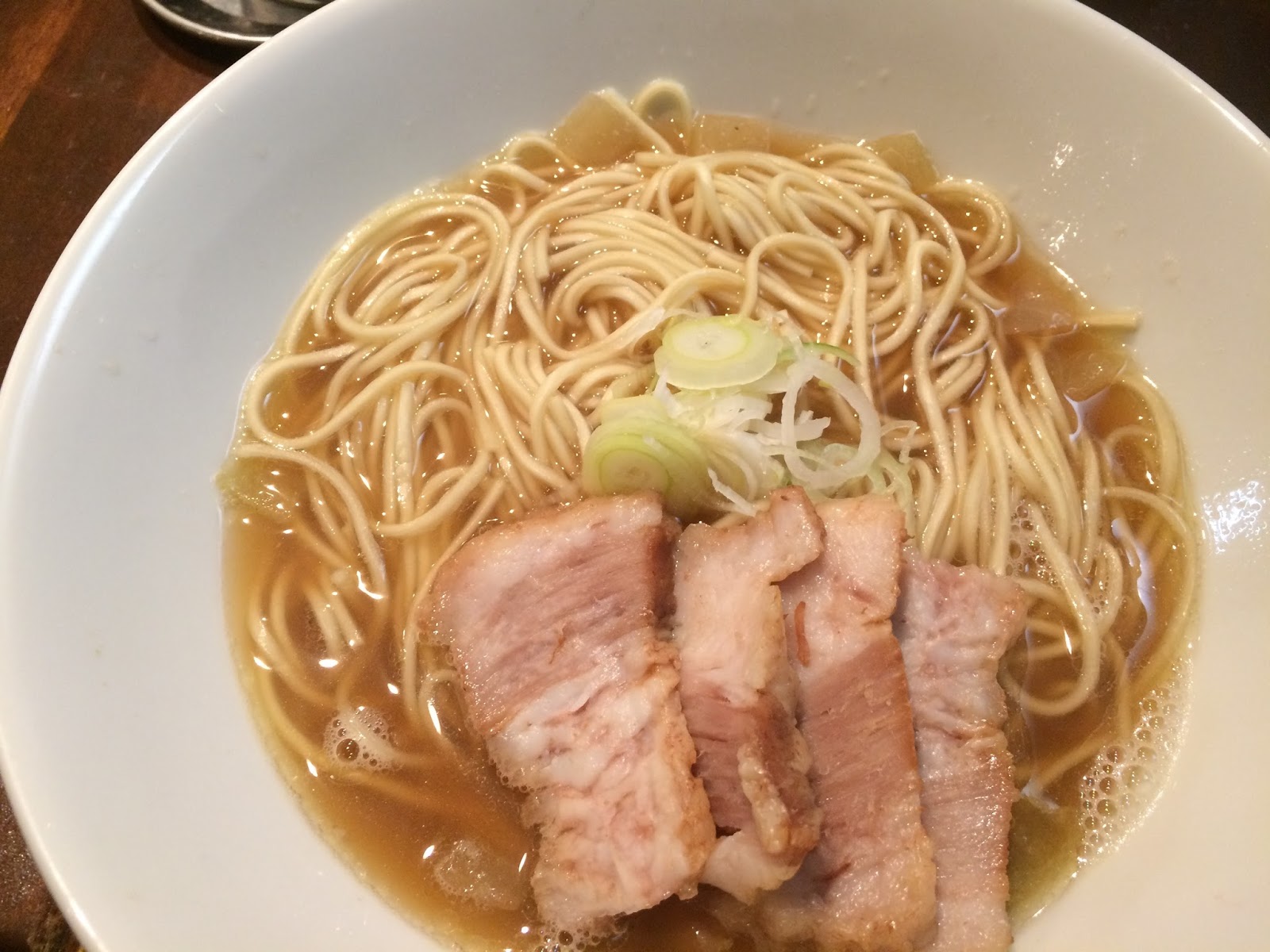
Nikusoba (medium - 850yen)

If the new Menya Shichisai is a Thai massage of niboshi, where the master bends you in ways that are both energizing and relaxing, Ito's take on niboshi is more of a gentle Swedish caressing of the body. This is smooth niboshi blues, with thin noodles that soak up the creamy and slightly translucent broth.


The toppings here are minimal - just some chopped green onions and, if you desire, some Hinai chicken or pork chashu. The focus is on the soup, of which you can order extra, something I've never seen in a ramen shop.


Simple and elegant, Ito is of its place in Ginza. These are bowls that slurp down easy.


Though the unpretentious manner in which its presented won't draw attention, those who can appreciate solid craft will find Ito a welcome addition to the increasingly refined Ginza ramen scene.


Tokyo, Chuo-ku, Ginza 6-12-2
Closest stn: Ginza

Open from 11am-11pm (closes at 8pm on weekends)

Hearts

Thursday, January 21, 2016

Bonito Soup Noodle RAIK: like RAIK

The only good ramen shops in Eifukucho have been Taishoken and Kusamura, another sweet shoyu shop. But last summer, another shop was made. As you can see by the title of this post, the concept is bonito, or katsuobushi. There are two types you can choose from, a chuka soba style chicken soup mixed with bonito...

Katsuo x Tori RAIK Ramen (900yen)

...and a thicker pork broth cut with bonito.

Katsuo x Buta RAIK Ramen (900yen)

The chicken has a dark shoyu color and seems like it would be really strong and salty, but the first sip blew my expectations away. It wasn't strong at all, and was actually very refreshing. Some might call this broth too light. The noodles include some kind of wheat, and you can taste the sweetness of the flour as you chew them.


The pork was closer to a tonkotsu gyokai style and, though less memorable than the chicken, was still deep and complex. Apparently, the master soaks pork bones for 12 hours to make the tonkotsu soup, but then spends another two days marinating the broth with the bonito. That's dedication!


Both bowls include a flavored half-boiled egg, two different cuts of pork (seared belly and smoked loin), and a slice of steamed chicken. For 900 yen, that is a bargain!


The master trained at Atago, another shop with a bonito concept, and we could feel his passion for his katsuo. After we finished, there were a lot of people waiting in line, which makes sense since this shop can only accommodate six people at a time. It's a cozy and genuine place, with hip hop music running on a big screen TV in the corner. Everyone should feel good vibes with this cool ramen.


Tokyo, Suginami-ku, Omiya 1-2-3
Closest stn: Eifukucho

Open from 1130-3pm and 530-10pm (closed Mondays)

Lum

Tuesday, January 5, 2016

麺や七彩 Shichisai: resurrection F

2015 was in many ways the Year of the Sardine. Shops came out with bold new ways of coaxing richness and depth from niboshi. My favorite of them, and possibly my favorite bowl of the year, was the reincarnated Shichisai. What was once a regular visit on the Tokyo Ramen Street, Shichisai remade its smooth Kitakata shoyu into a gutsy one loaded with niboshi, while also relocating into fancy new digs just a short walk away.

Kitakata ramen niboshi with egg (920yen)

This bowl might not be much to look at, but it belies a laborious process that goes into each and every  order. Like many new shops these days, Shichisai's noodles are made fresh in house, but unlike just about any other place, they are also made fresh to order.


The dough is kneaded, shaped, and cut for every single customer, right there in front of you. When they make it to the bowl, these are the softest and most flavorful noodles in the city.


They are the perfect foil for the rich, intense, slightly grainy flavor of the niboshi broth. Shichisai takes the sardine to levels of peak umami. Each bite just gets better and better until you're scraping the bottom of the bowl. The shop's attention to detail has maintained: the short, crisp menma to the perfectly seasoned half-boiled egg to the fatty and lean cuts of pork all provide the right notes.


They also have the occasional high-quality gentei, "limited-time" bowl. When Lum and I went, they were serving a cold ramen with broth made from exceptionally sweet Toukibi corn from Hokkaido and topped with juicy ham.

Maborosi no toukibi (1000yen)

Also fantastic, with different noodles crafted to soak the sweet corn sludge.


We were pretty sad when Shichisai left the Ramen Street, but, like a true Saiyan, they trained in the hyperbolic time chamber, learned a few new tricks, and came back stronger than ever.


Tokyo, Chuo-ku, Hacchobori 2-13-2
Closest stn: Hatchobori

Open from 1130am-330pm and 530-1030pm (closed every third Tuesday)

Hearts
Wednesday, December 30, 2015

かつ屋 Katsuya: a married couple

I always crave Eifukucho Taishoken, but because of its large portion, it's not always practical, so sometimes I try to find something similar. Katsuya, not too far from ET, was a nice surprise.


There was a line when we arrived, but it moves fast. Young and old couples, parents and their kids, this seemed like a place loved by the locals for a long time.

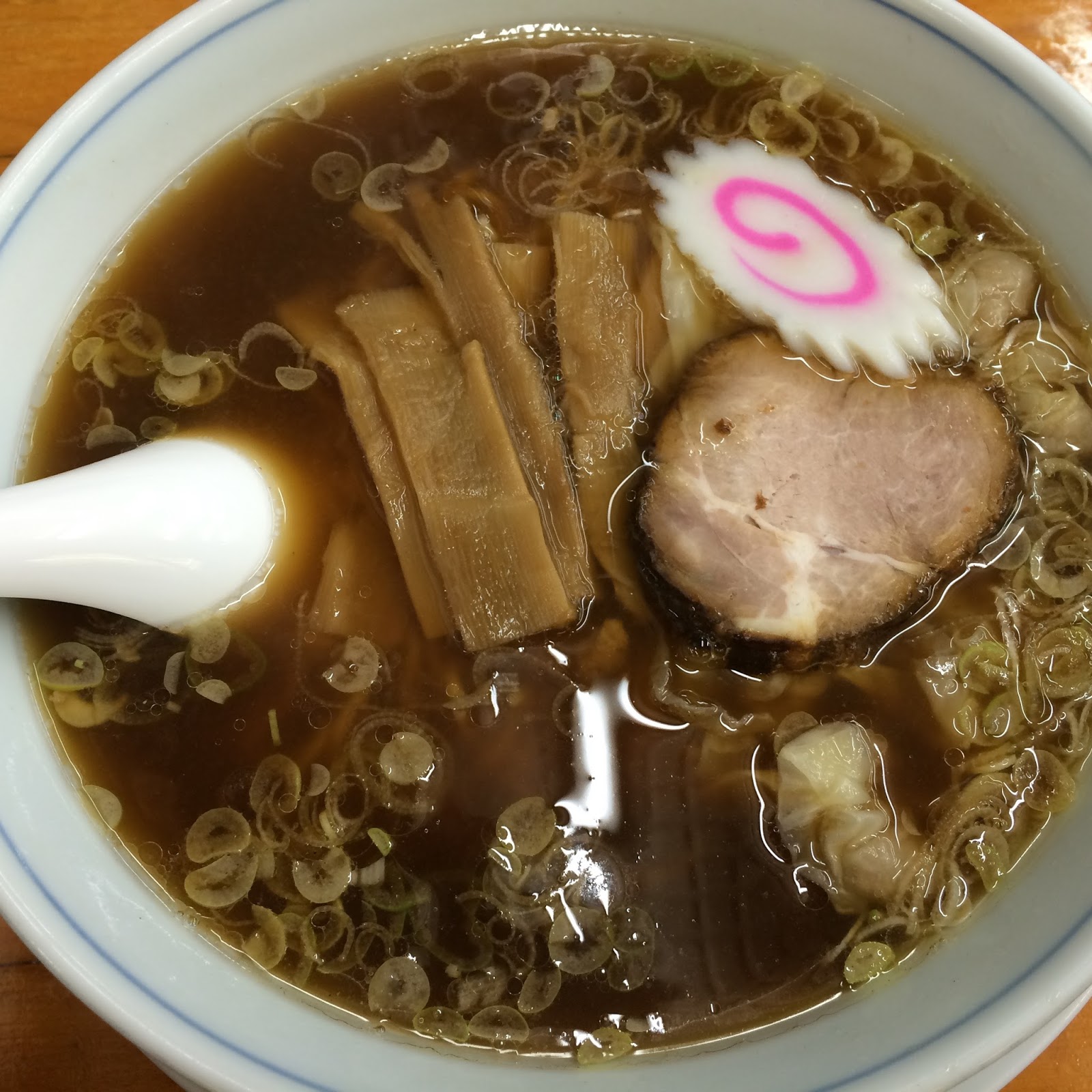
Chukamen (770yen - half noodles, half wontons)

Most customers seemed to order a half ramen, half wonton portion ("han-han" in Japanese). Here, the policy is that you can substitute half the noodles for wontons. ALWAYS GET THE WONTONS.


The staff is comprised of a married couple, serving ramen silently but professionally. Their passion came through when we were watching them make one bowl in particular. The wife cracked the raw egg yolk that comes as a topping, and threw the entire bowl down the drain. Mottainai! If I were waiting for that ramen, I wouldn't care about a cracked egg. After the mishap, they continued to make perfectly crafted bowls quietly and efficiently.


The flavor is like a milder version of ET.


I really like the ability to get a smaller portion with wontons, as opposed to the mountain of food at ET, and the price is also quite a bit more reasonable.


If you're an ET fan, you'll want to try Katsuya.

Tokyo, Setagaya-ku, Umegaoka 1-22-11
Closest stn: Umegaoka

Open from 11am-230pm and 530-8pm (closed Wednesdays)

Lum

Monday, December 14, 2015

らーめん 茂木 Mogi: always

Several shops in the Sangenjaya/Ikejiri-Ohashi area were closed for a holiday, but Mogi was open.


Smoky and dingy inside, with every bowl slowly and painstakingly put together by a single master, this shop was a nice surprise. Mogi serves up a light tonkotsu-gyokai. Everyone was ordering wontons, so we did too. This is, without a doubt, the smartest thing you can do at Mogi.

Wonton men (900yen)

For a couple extra bucks, you get a heaping mound of thick-skinned wonton filled with juicy minced meat. If a shop serves up a wonton option, always go with the wontons. Always.


The light and chewy noodles are the perfect foil for the large wonton because they not only soak up the soup, but pick up a good amount of the finely chopped scallions.


A fine old-school shop that serves up a hearty bowl in a ramen diner setting.


Tokyo, Setagaya-ku,Taishido 2-13-1
Closest stn: Sangenjaya

Open from 1130am-230pm and 6-1030pm (closed Sundays)

Hearts