Saturday, February 28, 2015

てんtoてん Ten to Ten: via Okinawa

Hearts and I took a quick sojourn to Okinawa to escape the desolation of Tokyo's winter. Just a three hour flight, and paradise awaits.


Soki soba technically isn't ramen, but it's close enough, and we were starving. It's an Okinawa local cuisine, with noodles made from flour in a process similar to Chinese noodles. Soki soba is sort of a cross between udon and ramen, with light soups made from kelp and bonito.


Ten to Ten was highly regarded by the locals. Inside, the shop looks like a Japanese private residence with its floor seating. Very heartwarming.


We tried their soki soba with a brown rice ball and zenzai (red bean soup).

Okinawa suba set (1100yen)

The soup was incredibly clear and tender. Unlike ramen, it's so light that I would crave even if I was feeling sick. I usually don't slurp the entire soup, but I did here. Kakuni is a soft, marinated form of chashu, and this kakuni was so soft that I could cut it with my chopsticks. The pork had a sweetness to it, and I even gobbled up the thick chunks of fat. Hearts looked at me and was disgusted.


The noodles are a little flavorless, but have a fantastic wavy and slippery texture. They were dancing in my mouth.


The brown rice ball was good...


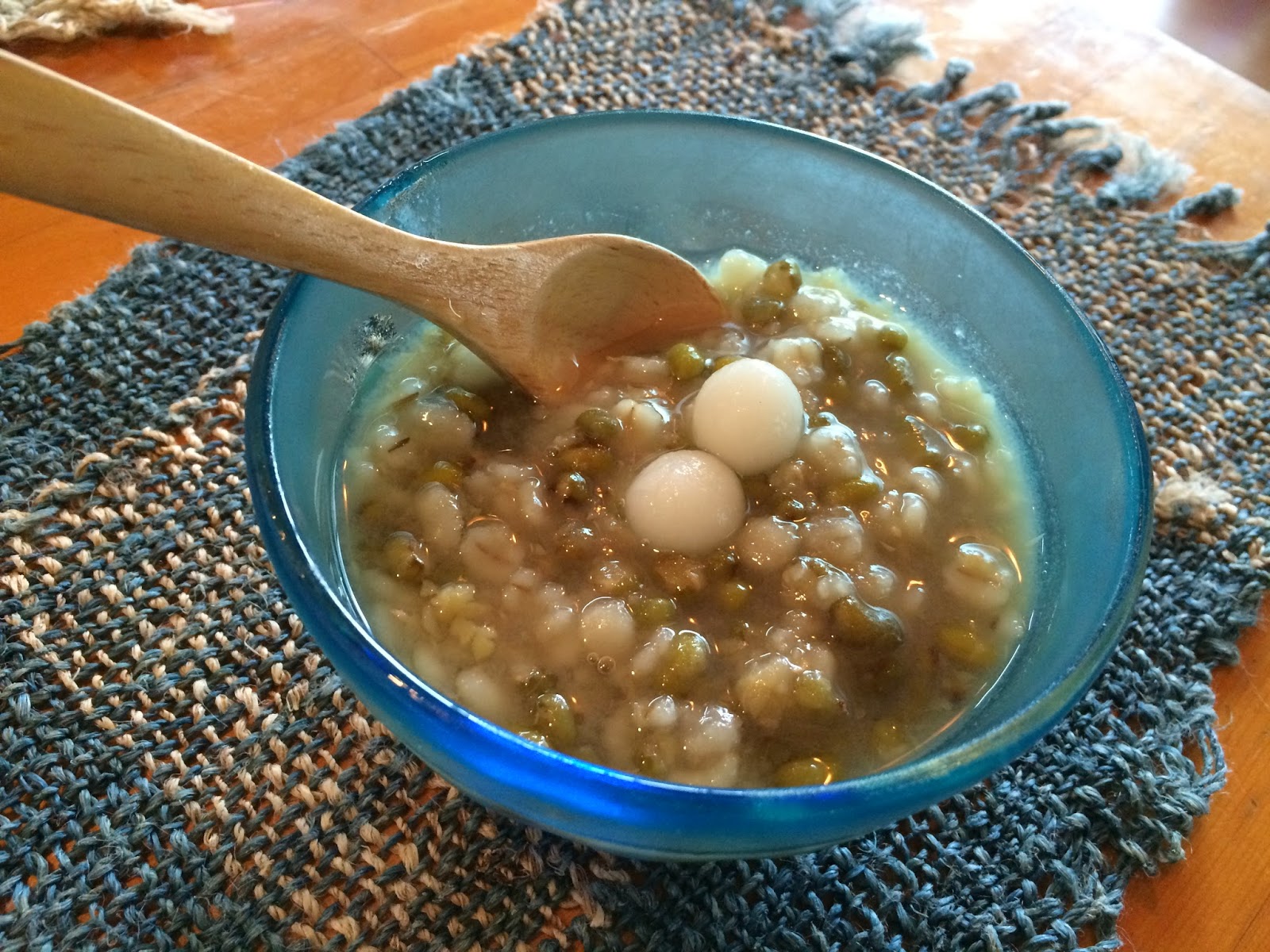
...but the zenzai (red bean soup) after was the best finish. So clean, cold, and sweet, with a fantastic textural balance between the grains of soft rice and the chewy mochi.

Just writing this post makes me remember how great the soup was. I'll definitely be back when I'm in Okinawa again.


Okinawa, Naha, Shikina 4-5-2
Closest stn: Shikina Park (There are few major subway or train lines in Okinawa, so it's better to drive here or take a cab)

Open from 1130am-3pm (closed Mondays)

Lum

Tuesday, February 24, 2015

IPPUDO SHIROMARU BASE: another late-night shibuya slurp

Ippudo got me hooked on drunken pork tonkotsu, so I'm always on the lookout for their newest renditions.


In celebration of their 30th anniversary, the Kyushu maesters opened up a shop in the heart of Shibuya's Center Gai, right around the corner from the local Family Mart. This is, quite possibly, the best location for a shop in the entire world.

Ippudo's trademark jasmine tea

Ippudo is known for their akamaru red and shiromaru white bowls. The former has a deeper flavor, topped with burned garlic oil and homemade rayu oil, while the latter is the fatty, porky original. This new shop only offers the shiromaru, but at a slightly discounted price so you can trick it out with your choice from a wealth of toppings. Two for a hundred yen!


This is the standard. And no waiting an hour for your bowl while hipsters sip cocktails and take selfies.

Shiromaru ramen (700yen)


Shiromaru won't win any awards, unless your liver is giving out Oscars for Best Booze Sponge. This is just a simple, solid, post-drinking bowl, no frills, no fuss.


Tokyo, Shibuya-ku, Udagawa-cho 25-3
Closest stn: Shibuya

Open from 11-5am (6am on weekends)

Hearts

Thursday, February 19, 2015

ラーメン 煮干王 凪ゴールデン街店本館 Nagi Golden Gai: 24 hour party people

Tokyo never sleeps, even on New Year's Day!


After counting down at an overcrowded party at the top of the Mori Tower in Roppongi, we got tired. The place was packed and we couldn't move.


We craved some toshikoshi ramen, the first ramen of the new year. We hopped on a train and went from Roppongi to Shinjuku. Surprisingly, Nagi opened their shops for 24 hours even during the new year's holiday. It was my first time visiting the original Golden Gai shop, in the midst of a sea of small bars that has been getting more popular with tourists these last few years.


Nagi Golden Gai is extremely narrow. You open the door, and the narrow staircase leads you straight into a counter of ten. Even at 3am on New Year's Day, the place was packed. We all ordered the Niboshi (bonito) Ramen.

Niboshi ramen (820yen)

Their advertisements say, "If you don't like bonito, don't order," so I was looking forward to seeing how strong the flavor was.


The noodles are thick and wavy. Once I bit into them, the chewiness mixed well with the bonito flavor.


In addition to the regular noodles, there are wonton strips as well. The silky texture of the wontons was a nice contrast to the chewy noodles. This is a wild bowl!


I slurped it down like it was three in the afternoon. I usually prefer clear or old-school ramen, but if I'm feeling wild, I'll come back here.


I love Tokyo!

Tokyo, Shinjuku-ku, Kabukicho 1-1-10
Closest stn: Shinjuku

Open all day (no holidays!)

Lum

Monday, January 19, 2015

麺や 庄の Shono: ramen creator

From one mad scientist to another...


Shono-san's shops are legendary and legion. We've already been to his tsukemen shop, 2-Chome GACHI and his abura soba shop, also GACHI Abura Soba. For the first new shop of the year, we introduce Shono-san's original shop in Ichigaya. Shono dubs himself a "ramen creator," and his bowls are always coming and going at the whims of their creator's restless mind.


Shono's original ramen is a tonkotsu-gyokai blend, soaked in pork bones over two days, that is a very porky rendition of the ubiquitous bowl.

Ramen (760yen)


It's a solid bowl, but Shono is known for his wild, limited-edition creations. Here's a sampling of some of the stuff that Shono has offered in the past.

First up, one of his menu's staples, the kamatama tsukemen.

Kamatama tsukemen (900yen)

A fusion of abura soba and tsukemen, this is an extremely filling bowl that's now offered only in the summer. You mix the noodles with all the toppings - chashu, niboshi, green onions, raw egg, fried noodles - and have a few bites before dipping it in the broth.

Next up, the salmon tsukemen.

Salmon tsukemen (980yen)

A rich blend of salmon paste and tonkotsu pork broth, this is heartier than it looks, but the combination is terrific, giving the usual tonkotsu-gyokai mix a sharper, smokier flavor.

Last winter, Shono had a fantastic oyster tsukemen, with a sour oyster and pork broth filled with lemon slices, paired with noodles soaked in hot dashi water.

Oyster tsukemen (1000yen)

Basil oyster, menma pickled in ume sour plum, and two different spicy pastes rounded out this complex bowl.


This year, Shono has brought back his super-hyped foie gras bowl: a broth that blends rich fois gras paste with a tori paitan chicken stock, and topped with several generous slices of foie gras, extra foie gras oil, and some ume grated daikon for a refreshing kick. As usual, it has an exquisite attention to design and color.

Foie gras tori paitan (1000yen - full disclosure, this bowl was eaten at sister shop GACHI)

The noodles are thick and al dente, chewier than his usual ramen or tsukemen, almost like an Italian pasta in texture.


This is one of the richest bowls I've ever had. By the end of the bowl, I felt like I had downed 2000 calories. Due to extensive popularity, Shono-san is putting this bowl out until the end of January. You can only get it at his gotsubo branch, but get there early as it's limited to just 20 bowls a day.


Shono-san's bowls are delicious, but also works of art in and of themselves. In a world of ramen derivation, Shono-san is truly a singular genius.

Tokyo, Shinjuku-ku, Ichigayatamachi 1-3
Closest stn: Ichigaya

Open from 11am-3pm and 5-11pm (11am-5pm on Sundays)

Hearts

Friday, January 9, 2015

Nissin Cup Noodles Museum: The Chicken Ramen Factory

For our 100th post, and first post of 2015, we wanted to do something special. Most people know about the Shin-Yokohama Ramen Museum, but don't know about a second ramen museum located not too far away: the Nissin Cup Noodles Museum.


Nissin is the biggest instant noodle company in the world, and there are many exhibitions to see or learn about the history of instant ramen and its pioneering inventor, Momofuku Ando.


When you walk into the lobby area (yes, there's a lobby), you're greeted by a giant paper mache version of a Nissin Cup Noodles. Even the nutritional facts are recreated!


Once inside, you can see all sorts of exhibits. Especially cool is this one, where you can see all the packaging and styles of instant ramen since its creation in 1958!


The biggest draw for us was the ability to create your own Cup Noodles, where you can choose the toppings and decorate your cup. However, we had a special purpose on this day: to make our own Chicken Ramen from scratch! We luckily had the last two tickets to the Chicken Ramen Factory available.


The cooking room was packed with parents and their children. We were told to put on a cute bandana and apron while the guide explained the history, ingredients, and process of cooking Nissin Chicken Ramen. We were then divided into small groups to make our batches.


Hearts and I worked as a pair. You first mix the dough until it gets hard (this takes a while). After the dough is formed, you flatten it and put it through the noodle slicer. We felt like ramen shop owners! Finally, the noodles are dried and placed into a small cylinder for frying.


Once the noodles are formed, they're fried right in front of you. You can watch them cooking in the kitchen on a monitor, or through a viewing glass.


It was like watching my own child grow up...and then get deep-fried before my very eyes.


While waiting for the ramen to cool, you draw pictures on your instant ramen bags (we had to smack some kids around who were hoarding the colored markers). Finally, we stuffed our ramen into the packs and were told to get out.


Starving for ramen at this point, we needed a quick fix. Luckily, the Ramen Museum has a full ramen courtyard, with shops of noodle styles from all over the world. But we weren't in mood for anything fancy; just a bowl of the good ol' Nissin flavors we spent nearly an hour laboring over.

Chicken Ramen with cheese or egg (200yen)

I wasn't expecting such an interactive experience, but I was so excited making my ramen that I completely lost track of time. The Nissin Museum really encourages your creativity in the spirit of Momofuku Ando, the mad ramen scientist himself. And you leave with an original Chicken Ramen!

Momofuku Ando, bronzed

Yokohama, Naka-ku, Shinko 2-3-4
Closest stn: Yokohama

Open from 10am-6pm (Reservations for the Chicken Ramen Factory is highly recommended, closed Tuesdays)

For info, see: http://www.cupnoodles-museum.jp/english/index.html

Hearts and Lum